1918 Logging Camp Influenza Outbreak
Train DreamsThe 1918 Logging Camp Influenza Outbreak is the sudden epidemic that closes the Robinson Gorge logging operation after Arn Peeples’s death, a near-fatal attack on Harold, Billy’s prolonged delirium, and illness among several other workers. Its decisive significance lies in the way it joins industrial danger to biological danger: the men who spend their days fighting giant spruce and moving timber with machinery are finally driven from the forest by an invisible sickness that defeats both their labor system and their captain’s authority.
Causes and Background
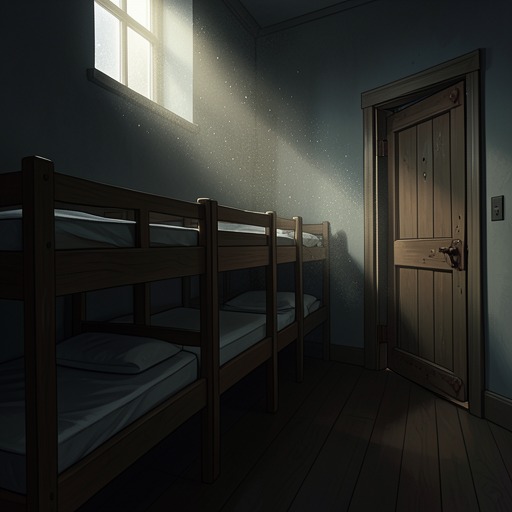
The outbreak occurs in a remote camp operated by the Simpson Company, where more than thirty-five and sometimes over forty men fell and buck giant spruce from sunrise until supper. Grainier works as a choker, looping cables around eighteen-foot logs so that six-horse teams can drag them within reach of the railway landing. The work is physically punishing, and the men live in isolation, sleeping almost where they fall. A few have cabins, but most occupy patched tents, some made from Civil War infantry canvas and, according to Arn Peeples, later used by U.S. Cavalry during the Indian campaigns. The camp’s crowded, improvised conditions and separation from ordinary settlements make illness especially threatening.
The workers are already accustomed to sudden death. Arn Peeples has warned that trees are killers and that after a saw has entered the wood, the men are effectively at war with the forest. He himself has survived explosive charges and has imagined, in effect, that a dramatic blast would be his end. Instead, a dead branch from a tall larch strikes him across the back of the head. The accident begins the chain of illness that reveals how little control the camp possesses over its own hazards.
What Happens in the Camp
Peeples initially appears to recover from the blow. He complains that his spine feels “knotty amongst the knuckles” and that he wants to walk “crooked,” then suffers dizzy spells and becomes dreamy and forgetful. After spending Sunday in chills and fever, he is found dead in bed on Monday morning, covered up to the chin and appearing so comfortable that the captain suggests lowering him into a grave with the bed and blankets undisturbed. The manner of his death is grimly ironic: the standing tree that Peeples had described as capable of being a friend becomes the source of the branch that kills him.
At Peeples’s grave, his friend Billy remembers him as an honest man who never cheated or stole. The camp cannot stop for a day of mourning because the company’s work continues under the economic pressure created by the demand for spruce during World War I. The captain says that the company and the war leave no room for rest, even though an armistice has already been signed eighteen months earlier. His inability to trust the armistice, which he regards as merely a pause before renewed slaughter, gives the camp’s industrial routine a larger atmosphere of ongoing war.
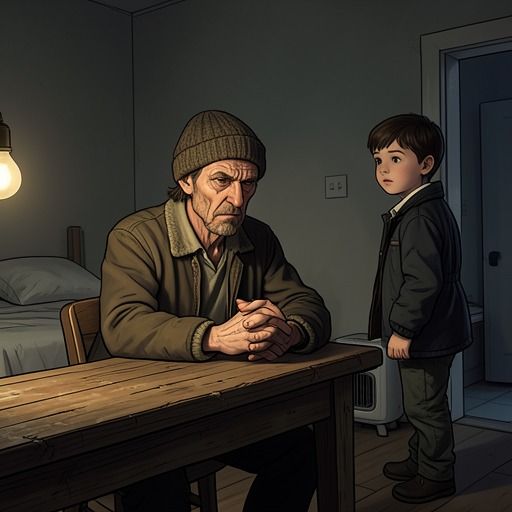
Two days after Peeples’s death and burial, twelve-year-old Harold, the captain’s son, suffers a dizzy spell while carrying dogfish oil along the skid road. He collapses in front of the horses, which shy and nearly overturn their load. Grainier happens to be nearby and saves the boy from being trampled by pulling him away by the leg of his pants. Harold remains feverish and delirious while his father spends the afternoon bathing his forehead with spring water. The boy’s illness makes the outbreak personal for the captain: the camp’s leader, usually defined by command and practical fairness, becomes a frightened father watching over his only close family connection.
That night Billy also develops chills. The usually silent old man pitches from side to side on his cot and raves until after midnight, repeatedly calling his own name and asking who is there. Men sleeping farther away later report hearing his voice in their dreams. His delirium therefore spreads beyond his cot into the camp’s shared imagination, making sickness a collective disturbance rather than an isolated medical problem.
Shutdown and Immediate Consequences
Harold’s fever eventually breaks, but Billy’s continues. The captain wanders through the camp in alarm, examining the men as if they were livestock by poking their joints, lifting their eyelids, and prying open their jaws. On Friday night he announces that the summer operation is finished. The work is shut down by Sunday night, after the last logs have been sent down the mountain, while six more men have developed chills. Billy survives the immediate crisis, but the captain fears an epidemic like the one in 1897.
The captain’s fear is grounded in private history. He had been orphaned during the earlier epidemic, when all thirteen of his siblings died in a single week. The workers see a strong, fair leader who rarely speaks with anyone except Harold; they had not known that he had grown up without a family. The influenza outbreak thus exposes a concealed wound in the man who is supposed to manage the camp, while also showing that managerial authority cannot protect the people under it.
On Monday morning the captain gives every worker a four-dollar bonus and orders them to leave. Grainier has sent money home throughout the summer and is still owed four hundred dollars, but payment and dismissal cannot restore the camp’s lost security. The outbreak reverses the normal direction of the logging operation: instead of men and horses bringing timber toward the landing, the workforce scatters away from the forest. The camp’s economy, transportation system, and hierarchy all become secondary to flight from infection.
Relation to Grainier’s Later Life
The epidemic is followed in Grainier’s life by further movement between dangerous labor, bereavement, and precarious rebuilding. After returning from the Robinson Gorge job with four hundred dollars, he discovers that the 1920 Moyea Valley fire has consumed his home and apparently taken Gladys and Kate. He spends weeks in grief and confusion, then tries to return to the burned homesite with supplies, only to find the valley too devastated to inhabit. Later he goes back, sees fireweed and jack pine rising from the ash, and eventually builds a new cabin among the transformed landscape.
The outbreak therefore belongs to a larger pattern in which catastrophe repeatedly interrupts human plans without fully ending Grainier’s capacity to continue. The logging camp is destroyed by illness; his home is destroyed by fire; later economic necessity sends him back to hauling and freighting. In each case, survival depends less on restoring the former world than on improvising another life from what remains. The camp captain’s fear of epidemic, Grainier’s later grief, and the valley’s eventual regrowth all make disaster a force that changes social and ecological conditions rather than a temporary interruption.
Narrative Significance
The outbreak contrasts visible industrial violence with invisible contagion. The forest announces danger through falling trees, dynamite, cables, horses, and machinery; influenza arrives through dizziness, fever, chills, delirium, and the gradual realization that one sick man is followed by another. The men can stop work for a dud charge and return when the explosion is made safe, but no comparable technical procedure can make the camp safe from disease.
Its social meaning also rests on unequal vulnerability. The workers are mobile laborers housed in rough tents and bound to a company schedule; the captain can calculate their pay and issue a bonus, but he cannot offer medical security or preserve the camp as a community. The four-dollar payment is both compensation and a means of dispersal. The epidemic makes clear that institutional order reaches the men chiefly through work, wages, and commands, while protection remains uncertain.
The event’s memory is enlarged by its proximity to Peeples’s death and by the captain’s recollection of his orphanhood. One death becomes a question about fever and brain injury; Harold’s collapse confirms that the danger is spreading; Billy’s voice turns the camp into a place of disturbed sleep; and the final dispersal converts fear into official action. The 1918 Logging Camp Influenza Outbreak consequently stands as a concentrated example of the book’s wider world, where labor, nature, disease, war, and private mourning continually overlap, and where a remote community can vanish almost as quickly from illness as a forest can vanish beneath axes and fire.